Cardiovascular Risk Prediction with Ensemble Learning
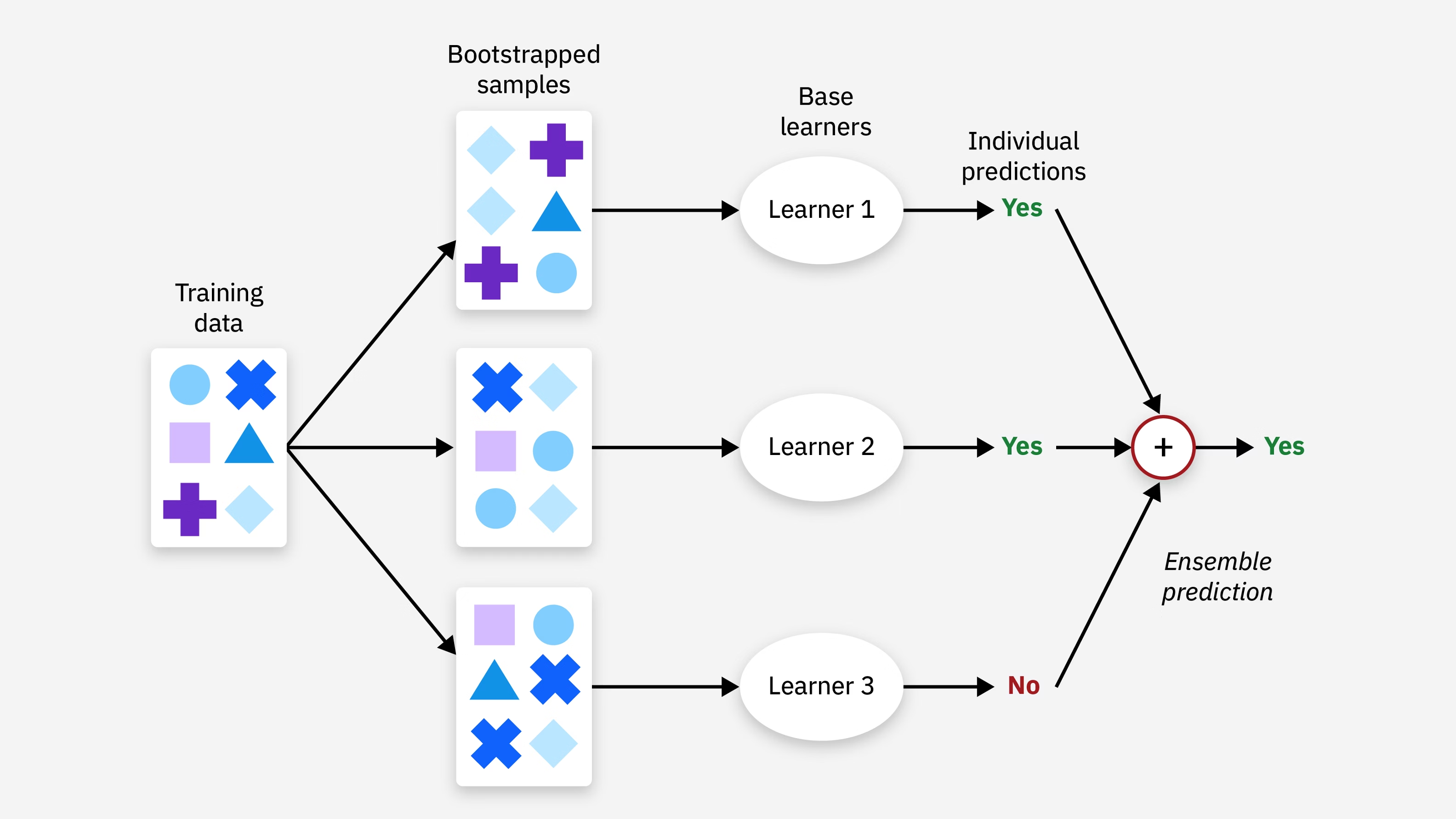
Developed machine learning system for early cardiovascular risk prediction using ensemble methods. Implemented feature engineering, data balancing, and compared Random Forest, Gradient Boosting, and XGBoost algorithms. Model evaluates demographic, physical, and behavioral factors to classify risk levels with improved stability over single-model approaches.
Technologies Used
Project Overview
This project focuses on applying ensemble learning to perform early cardiovascular disease risk prediction based on health and lifestyle factors. The system was developed as part of AI & Deep Learning course, with the goal of building an accurate, robust, and interpretable predictive model to support earlier disease prevention efforts. The model utilizes structured data covering demographic attributes, physical conditions, and behaviors to represent cardiovascular risk factors.
System Architecture
Data Preprocessing & Feature Engineering: Handling missing values, categorical feature encoding, class data balancing, and correlation-based feature selection to improve data quality and model performance.
Ensemble Learning Models: Implementing and comparing several ensemble algorithms to obtain model with best generalization including Random Forest, Gradient Boosting, and XGBoost.
Model Evaluation: Performance evaluation using classification metrics to measure accuracy, stability, and model generalization capability.
Key Features
Early Cardiovascular Risk Prediction: System designed to classify cardiovascular risk at early stage using health and lifestyle data as decision-making basis.
Ensemble Learning-Based Modeling: Multiple machine learning algorithms combined to improve prediction performance and reduce overfitting risk compared to single model approach.
Explainable Feature-Oriented Approach: Feature engineering and feature selection process performed to improve model interpretability and understand factors most influential on cardiovascular risk.
Project Outcome
✓ Stable ensemble model reducing overfitting with identified key health risk factors